

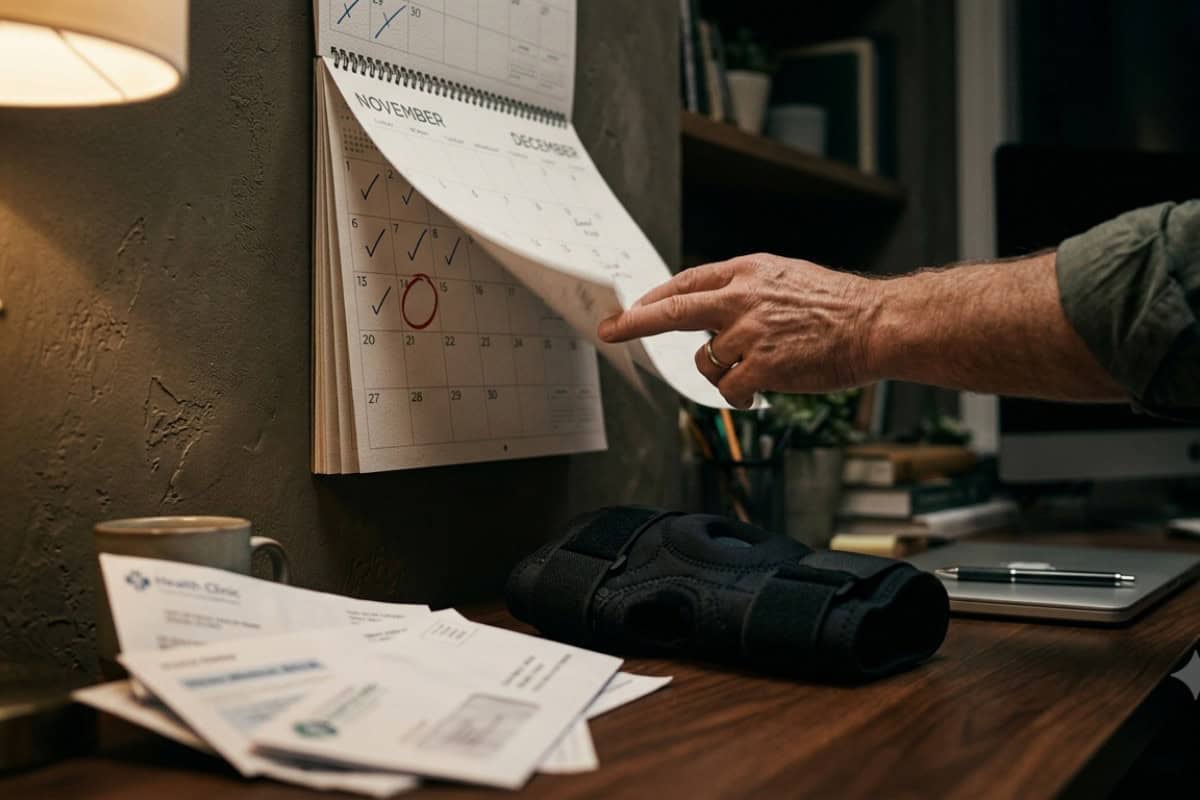
20 Jul What Happens If I Miss the Deadline to File an Injury Claim?
If you are lying awake wondering what happens if I miss the deadline to file an injury claim, take a breath — you are asking exactly the right question, and asking it is the first step toward protecting yourself. In Oklahoma, the honest answer is that missing the legal deadline is serious, but it is not always the automatic dead end that people fear. There are firm rules, and there are narrow exceptions, and the only way to know which side of the line your case falls on is to look closely at the facts. This guide walks you through the Oklahoma deadline, what actually happens in court when it passes, and the specific situations that can pause the clock.
What happens if I miss the deadline to file an injury claim in Oklahoma?
Here is the plain truth. A statute of limitations is a law that bars a claim once a set amount of time passes after an injury. If that window closes and you file anyway, the person or company you are suing will almost certainly ask the court to throw the case out. Judges take these deadlines seriously: in the vast majority of cases, a lawsuit filed after the deadline is dismissed, and once it is dismissed for that reason you lose the right to recover money for your injuries — no matter how badly you were hurt or how clearly someone else was at fault.
Importantly, the deadline is not something the judge polices on their own. It works as an affirmative defense, which means the defendant has to raise it. In real life, defense lawyers and insurance companies raise it every single time it helps them, so you should never count on them overlooking a late filing. That is why the safest move is always to treat the deadline as a hard wall and to speak with an attorney long before it approaches.
The Two-Year Oklahoma Deadline
For most personal injury cases in Oklahoma — car crashes, slip and falls, and most other accidents caused by someone else’s carelessness — the general deadline is two years. That rule comes from Oklahoma’s civil statute (Okla. Stat. tit. 12, § 95), which sets a two-year limit on an action for injury to the rights of another. In everyday terms, the clock usually starts ticking on the date you were hurt, and you generally have two years from that date to formally file your lawsuit in court.
Two years can feel like a long time when you are focused on healing, physical therapy, and getting back to work here in Tulsa, OK. But building a strong case takes time. Evidence disappears, vehicles get repaired, surveillance footage is erased, and witnesses forget details or move away. Waiting until the last month to call a firm puts everyone at a disadvantage. If you are unsure whether your deadline has already passed, do not guess — call Truskett Law and let us calculate it for you at no cost.
Exceptions That Can Pause the Clock
Oklahoma law recognizes a handful of narrow situations that can “toll” — that is, pause or delay — the deadline. These exceptions are the reason a case that looks hopeless on paper sometimes turns out to still be alive. They are not loopholes you can assume apply to you; they are specific legal doctrines that a court must find fit your facts. The table below summarizes the main ones, and every exception is explained in plain language in the paragraphs that follow.
| Exception | Effect on the Deadline |
|---|---|
| Discovery rule | Clock starts when the injury is reasonably discovered |
| Injured person is a minor | Tolled until the minor turns 18 |
| Legal incapacity | Tolled during incapacity |
| Defendant absent from the state | Time out of state may not count |
| Fraudulent concealment | Deadline paused while the wrongdoing is hidden |
The discovery rule applies when an injury was not reasonably discoverable right away. Some harms — for example, an injury from a defective product or a surgical error — do not show up until months or years later. When that is the case, the clock can start when the injury is reasonably discovered rather than on the date it actually occurred.
When the injured person is a minor, the deadline is generally tolled until the minor turns 18. In other words, a child hurt in an accident usually does not lose their rights simply because a parent did not file in time; the two-year period is paused and typically begins to run once they reach adulthood.
A related protection applies to legal incapacity. If an injured person cannot manage their own affairs — for instance, because of a serious cognitive impairment — the deadline can be tolled during the period of incapacity. The clock is paused while the person is legally unable to bring a claim on their own.
There is also an exception for a defendant who is absent from the state. If the person who caused your injury leaves Oklahoma, the time they spend out of state may not count toward the two-year limit, so the deadline can effectively be extended until they return or can be served. Finally, fraudulent concealment can pause the deadline while the wrongdoing is hidden. If a wrongdoer actively conceals what they did so you could not have reasonably known you had a claim, a court may hold that the deadline is paused for as long as the concealment kept the truth from you.
Each of these exceptions is fact-intensive, and none of them should be assumed without a lawyer reviewing your situation. The difference between a case that survives and one that is dismissed often comes down to details most people would never think to document.
What to Do If You Think You Missed It
If you believe your deadline may have already passed, the worst thing you can do is give up without a second look. Many people talk themselves out of a valid claim because they miscounted the date or did not realize an exception applied. Here are practical steps to take right now:
- Write down the date of your injury and everything you remember about how it happened.
- Gather any records you already have — medical bills, photos, police reports, and insurance letters.
- Do not sign anything or accept a settlement offer before getting advice.
- Avoid assuming your case is dead; only a careful legal review can tell you whether an exception may apply.
- Call an experienced Oklahoma attorney as soon as possible, because some exceptions still have their own time limits.
You may also be wondering whether a firm will even take your case this late. If a lawyer once turned you away, that does not always mean no attorney will help — sometimes it simply means the timing or the facts needed a closer look. If you have questions about why that happened, our related article on why a lawyer may decline a case can help you understand the reasons and your next move.
Why Choose Truskett Law
When the clock is your enemy, you want a team that moves quickly and communicates honestly. At Truskett Law in Tulsa, OK, we have built our practice around treating injured Oklahomans like neighbors, not case numbers. Here is what sets our firm apart:
- We give you a straight answer about your deadline and your options, even when it is not what you hoped to hear.
- We investigate fast, preserving evidence before it disappears.
- We handle the insurance companies so you can focus on healing.
- We work on a contingency basis, so you owe no attorney fee unless we recover for you.
- We are local, accessible, and genuinely invested in our Tulsa community.
Whether your accident happened last week or you are worried you waited too long, the sooner you reach out, the more we can do. Do not let uncertainty cost you the compensation you deserve.
Contact Truskett Law today — call for a free, no-pressure case review.
Conclusion
So, what happens if you miss the deadline to file an injury claim in Oklahoma? Most of the time the court will dismiss the case and you lose the right to recover — which is exactly why the two-year limit deserves your urgent attention. Yet the discovery rule, protections for minors and those with legal incapacity, the absence of a defendant from the state, and fraudulent concealment can all change the picture. The only way to know for sure is to have a knowledgeable attorney look at your specific facts. If you have any doubt about your timeline, please contact us today.
Call Truskett Law, we are here to help you understand where you stand and what comes next.
Frequently Asked Questions
Can you still file a claim after the statute of limitations has passed?
In most cases, no. Once the deadline passes, the defendant can ask the court to dismiss your lawsuit, and courts usually grant that request. The main way a claim survives is if a recognized exception paused the clock, so it is worth having an attorney confirm your exact deadline before you assume it is too late.
What happens if you miss the statute of limitations for a personal injury claim?
If you file after the deadline, the opposing party will typically raise the statute of limitations as a defense, and the judge will likely dismiss the case. A dismissal on those grounds generally ends your ability to recover money for that injury. Because the outcome is so final, it is critical to act well before the deadline arrives.
Can the statute of limitations be extended in Oklahoma?
Sometimes. Oklahoma law allows the deadline to be paused, or tolled, in narrow situations such as when the injured person is a minor, is legally incapacitated, or when the wrongdoer concealed their conduct. These exceptions are fact-specific and do not apply automatically, so a lawyer needs to review your circumstances to determine whether one fits.
What is the statute of limitations for a personal injury claim in Oklahoma?
The general deadline for most personal injury claims in Oklahoma is two years from the date of the injury. This comes from Oklahoma’s civil procedure statute governing limitations of actions. Certain claims and certain defendants can change how that two-year period is counted.
How long do you have to file a personal injury lawsuit after an accident?
In Oklahoma you generally have two years from the date of the accident to file a personal injury lawsuit. The clock usually starts on the day you were hurt, though the discovery rule can move that start date if the injury was not reasonably discoverable right away. Filing sooner rather than later gives your attorney the best chance to build a strong case.
Sorry, the comment form is closed at this time.