
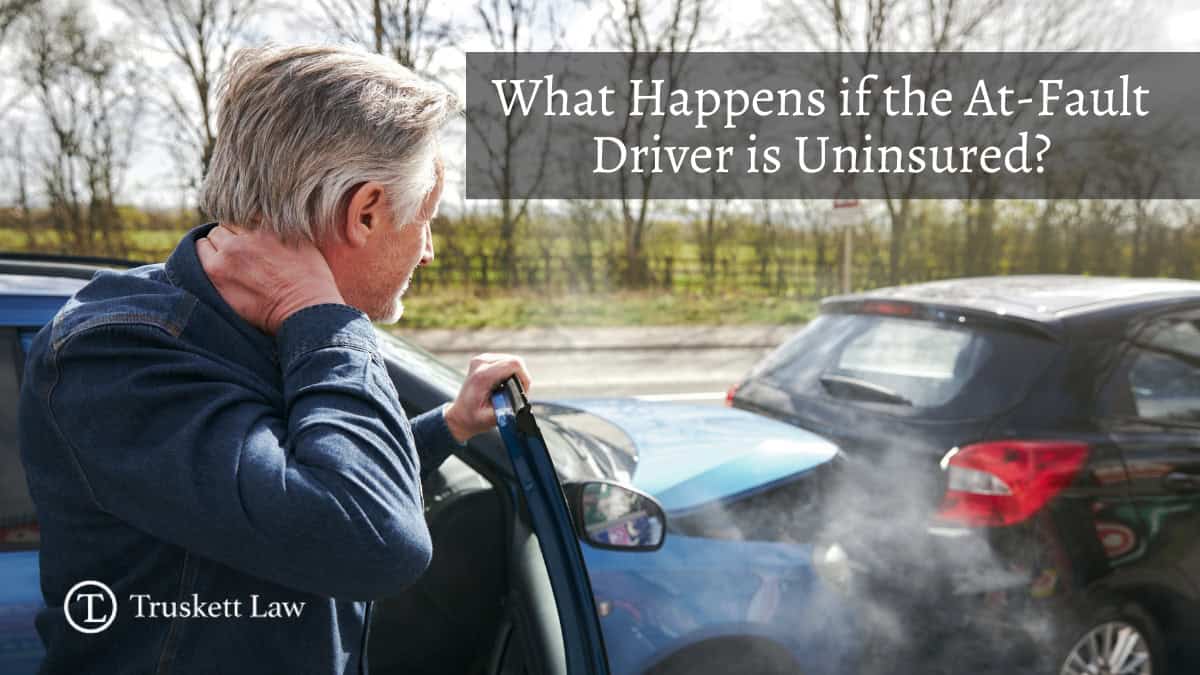
17 Feb What Happens if the At‑Fault Driver is Uninsured?
Car accidents are stressful enough, but discovering that the driver who caused your accident has no insurance can feel overwhelming. In the United States, millions of drivers remain uninsured or underinsured, leaving accident victims to navigate the financial and legal fallout alone. While insurance is meant to provide a safety net, the absence of coverage complicates matters significantly.
Understanding your options, the role of your own insurance, and how to pursue legal action is essential to protect your health, finances, and rights. At Truskett Law, we help injured individuals navigate these complex scenarios and ensure they receive the compensation they deserve.
The Reality of Uninsured Drivers
Statistics show that a significant number of drivers on the road do not carry liability insurance. According to recent estimates, approximately 12% of drivers in the U.S. are uninsured. This puts responsible drivers at risk, as they may face medical bills, property damage, and lost income without recourse if the at-fault party cannot pay.
Being involved in an accident with an uninsured driver can create confusion and frustration. Questions about liability, coverage, and legal recourse often arise immediately. Knowing your rights and options ahead of time helps you respond effectively and avoid costly mistakes.

What to Do Immediately After an Accident
Regardless of the at-fault driver’s insurance status, the steps you take immediately after an accident are critical. First, ensure your safety and the safety of others. Move to a secure location if possible and call emergency services if anyone is injured.
Document the scene thoroughly, including photos of vehicle damage, skid marks, road conditions, and any visible injuries. Gather contact information from witnesses and other drivers. Even if the at-fault driver has no insurance, this documentation will be vital for your claim.
The Importance of Filing a Police Report
Filing a police report is crucial when dealing with an uninsured driver. A police report provides an official record of the accident, including statements from all parties involved and any witnesses. This report serves as objective evidence that the accident occurred and supports your future claims.
Without a police report, insurance companies may challenge your version of events or deny claims due to insufficient proof. In many states, a police report is also required to pursue compensation through your own insurance.
Understanding Your Insurance Options
If the at-fault driver is uninsured, your own insurance coverage becomes the first line of protection. Policies often include coverage types specifically designed for such situations:
- Uninsured Motorist (UM) Coverage: This coverage compensates you for injuries and property damage caused by an uninsured driver.
- Underinsured Motorist (UIM) Coverage: If the at-fault driver has some insurance, but their limits are too low to cover your damages, UIM can make up the difference.
- Medical Payments (MedPay) or Personal Injury Protection (PIP): These cover medical expenses regardless of fault and can be useful in out-of-pocket situations.
Reviewing your insurance policy before an accident occurs can clarify what protections are in place. A qualified attorney can help interpret policy language to maximize coverage.
Filing a Claim Through Your Insurance
When the at-fault driver has no insurance, your claim will likely be filed through your own policy. This process can be complicated and often involves negotiation with your insurance company.
Insurance adjusters may try to limit payouts, claiming your policy does not fully cover certain damages or that the accident was partially your fault. Having an attorney to advocate on your behalf ensures that your claim is handled correctly and that you receive the compensation you’re entitled to.
The Role of a Personal Injury Lawyer
Consulting a personal injury lawyer is especially important when the at-fault driver lacks insurance. Lawyers provide expertise in navigating policy limitations, state laws, and legal deadlines.
A lawyer can also gather evidence, calculate the full extent of damages, and negotiate with your insurance company. In some cases, legal action may be necessary to hold the uninsured driver accountable or to secure maximum compensation from your own policy.
Additional Steps for Documenting Your Case
Proper documentation strengthens your claim and protects your rights. Keep detailed records of:
- Medical treatment and expenses
- Lost wages or reduced income due to the injury
- Property damage estimates and repair receipts
- Correspondence with insurance companies and witnesses
Maintain a journal of how the accident has affected your daily life. Emotional distress, physical pain, and limitations on activities are all part of your claim. The more complete your documentation, the stronger your case will be.
Handling Property Damage
If your vehicle is damaged and the at-fault driver has no insurance, you may rely on your own collision or comprehensive coverage to pay for repairs. Your deductible may apply, but your insurer can cover costs up to the policy limit.
In some cases, your insurance company may pursue reimbursement from the uninsured driver after paying your claim. This process, known as subrogation, can help recover out-of-pocket expenses, but it can be lengthy.

Dealing with Serious Injuries
When injuries are severe, including long-term disability or permanent impairment, compensation can involve more than medical bills. Pain and suffering, emotional distress, and future lost income are often included in claims.
A personal injury lawyer can work with medical and financial experts to calculate the full extent of your damages. Attempting to manage complex claims alone may result in receiving less than what you deserve.
Consider Small Claims or Civil Action
If your damages exceed your insurance limits, pursuing civil action against the uninsured driver may be an option. While collection can be difficult if the individual has limited assets, a lawyer can advise you on whether it’s worth pursuing and help file the necessary paperwork.
Even if full recovery from the driver is unlikely, taking legal action can ensure that your rights are formally recognized and protect you from future disputes.
Tips for Preventing Issues with Uninsured Drivers in the Future
While accidents can’t always be prevented, you can take steps to reduce the risk of complications:
- Confirm that drivers you ride with are insured
- Consider increasing your UM/UIM coverage limits
- Keep a detailed record of your insurance policies and benefits
- Act quickly after any accident to preserve evidence and meet deadlines
Proactive measures can protect you from unexpected financial burdens caused by uninsured motorists.
What If the Uninsured Driver Flees?
Hit-and-run accidents present additional challenges, especially if the driver is uninsured. In this situation, your own insurance company may cover damages under UM coverage.
It’s also important to gather any surveillance footage or witness accounts that can identify the driver. Acting quickly increases the chances of holding the responsible party accountable and recovering your full damages.
Notify law enforcement immediately and provide all details about the vehicle and the accident. A lawyer can help navigate both your insurance claim and potential civil action against the unidentified driver.
Why Acting Quickly Matters with Uninsured Drivers
Statutes of limitations limit the time you have to file claims or lawsuits. Delaying action can result in losing your legal rights entirely. Prompt action allows evidence to be preserved before it deteriorates or disappears. It also helps medical records and witness statements remain fresh, which strengthens your case.
Early involvement of a personal injury lawyer ensures that evidence is preserved, witnesses are identified, and deadlines are met. Quick action also strengthens your negotiating position with insurers.
Protecting Your Rights At Truskett Law
Accidents caused by uninsured drivers are stressful and legally complex, but you don’t have to face them alone. At Truskett Law, we help clients navigate the challenges of uninsured and underinsured motorist claims.
Our experienced team handles communications with insurance companies, evaluates the full extent of your damages, and takes the necessary legal steps to protect your rights.
If you’ve been injured by an uninsured driver, don’t wait. Contact Truskett Law today to understand your options, safeguard your future, and get the support you need to recover fully.
Sorry, the comment form is closed at this time.