
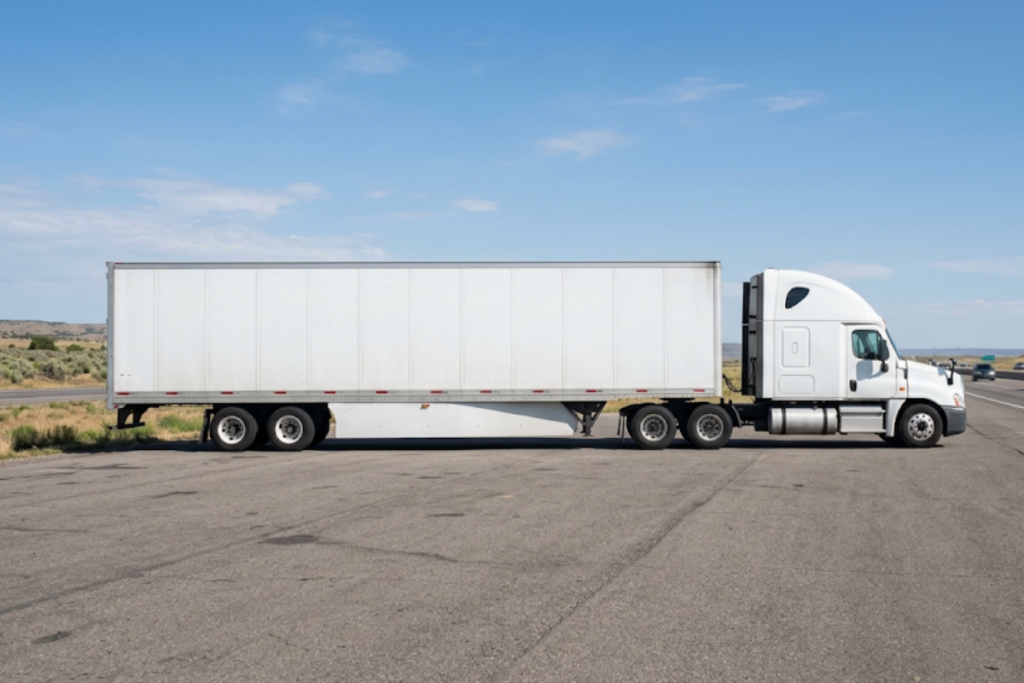
A loaded 18-wheeler weighing up to 80,000 pounds rear-ended four vehicles stopped in traffic on Interstate 44 near downtown Tulsa last winter, and the first question every injured driver asked afterward was the same one that brings most people to this page: semi truck hit my car, who do I sue, the driver or the company? The short answer is that you are often entitled to pursue both, because the driver’s mistake and the company’s decisions can be two separate legal wrongs. The longer answer depends on who employed the driver, how the truck was maintained, who loaded the cargo, and what the paperwork in the truck’s cab actually shows.
This is exactly the kind of trucking claim that gets more complicated the closer you look. A driver who ran a red light on 71st Street might have been pushed to keep driving past a legal hours limit by a dispatcher chasing a delivery window. A truck with worn brake pads might have passed a pre-trip inspection because a maintenance contractor cut corners. Figuring out who pays starts with figuring out who is actually responsible, and that is rarely just the person in the driver’s seat.
The stakes are not small. According to federal crash statistics, 5,788 people were killed in crashes involving large trucks in 2021, and 72 percent of those killed were occupants of other vehicles, not the truck itself. That number matters when the vehicle that hit you weighs up to 80,000 pounds and the ordinary passenger car it struck weighs closer to 4,000 pounds.
Semi Truck Hit My Car, Who Do I Sue First: The Driver or the Company?
A driver who was speeding, engaged in distracted driving, or driving while fatigued behind the wheel is personally liable for that decision, but in Oklahoma, most truck crash victims name both the driver and the trucking company in a claim, and there is a good legal reason for it. If the driver was working within the scope of employment when the crash happened, hauling a load, running a route, or otherwise doing the job the company assigned, the legal doctrine of vicarious liability, sometimes called respondeat superior, generally makes the employer responsible for the employee’s negligent acts on the road. That means the driver’s mistake becomes the company’s financial problem too.
It gets more complicated when the driver is technically an independent contractor rather than a direct employee, which is common in trucking. Federal leasing regulations require a motor carrier to maintain control over trucks and drivers operating under its own operating authority, and courts have repeatedly held that a carrier cannot simply hide behind an independent contractor label to avoid responsibility for a truck running under its name and placard. On top of that, a company can be held directly liable, not just vicariously, if it was negligent in hiring, training, supervising, or retaining a driver whose qualification file showed a history of violations. Pursuing the company for its share of the responsibility, rather than settling for whatever the driver’s personal auto policy can pay, is often the difference between a fair recovery and a fraction of what the injuries actually cost.
Other Parties Who Might Share the Blame
Recent research on large truck crashes puts the annual death toll above 5,300, with the large majority of those killed riding in passenger vehicles rather than in the truck itself, which is part of why identifying every responsible party matters so much. The driver and the motor carrier are the two most common defendants, but they are not always the only ones. If cargo was loaded improperly and shifted during transit, causing the trailer to roll, jackknife, or the driver to lose control, the company that loaded the freight can be a separate source of liability. If the truck had a mechanical failure, a blown tire, failed brakes, a steering defect, the question becomes whether the failure traces back to a maintenance contractor who serviced the truck or a manufacturer who built a defective part. Product liability claims against manufacturers are less common but not rare, particularly in cases involving brake systems, tire blowouts, or steering component defects.
The table below breaks down who can potentially be held liable after a semi-truck crash and the general circumstance under which each party’s responsibility comes into play.
| Potentially Liable Party | When They May Be Liable |
|---|---|
| Truck Driver | Liable for negligent acts behind the wheel, such as speeding, distracted driving, or driving while fatigued, that directly caused the crash. |
| Trucking / Motor Carrier Company | Liable under vicarious liability for a driver’s on-the-job negligence, and directly liable for negligent hiring, training, or supervision of that driver. |
| Cargo Loading Company | Liable when improperly loaded or secured cargo shifts in transit and causes a rollover, jackknife, or loss of control. |
| Maintenance Contractor | Liable when faulty brake, tire, or repair work performed on the truck leads to a mechanical failure that causes the crash. |
| Truck / Parts Manufacturer | Liable under product liability law when a defective part, such as brakes, tires, or steering components, causes or contributes to the crash. |
Why Choose Truskett Law
Naming the trucking company on a claim form and actually proving the company’s role in causing your injuries are two different things, and the gap between them is closed with paperwork most crash victims never see. Truskett Law’s approach to trucking cases centers on pulling the electronic logging device data straight from the truck’s engine control module before it gets overwritten, along with the driver’s hours-of-service logs, driver qualification file, and the motor carrier’s FMCSA safety and compliance history. Logging devices synchronize with a truck’s engine and can show whether the driver was over the legal driving limit at the moment of the crash. A qualification file can reveal whether the company knew about prior violations or a suspended license and put the driver on the road anyway. Maintenance records can show whether a truck was sent out with a known defect. Put together, that paperwork is what turns “the driver made a mistake” into “the company created the conditions for the mistake,” which is the legal foundation for vicarious liability and negligent hiring or maintenance claims against the carrier itself, not just its driver.
Trucks running routes through Tulsa on Interstate 44, the Gilcrease Expressway, and Highway 75 answer to the same federal recordkeeping rules everywhere in the country, and those records do not sit around waiting to be requested. Many are legally required to be kept for only a matter of months. Building the company-level case means moving on that evidence early, before it is gone, rather than waiting until a claim is already contested. Truskett Law reviews trucking crash evidence at no upfront cost, and there is no fee unless the case results in a recovery.
What Evidence Actually Proves Who Is at Fault
Proving fault in any collision starts with the same basic building blocks: the police crash report, photographs of the scene and vehicle damage, witness accounts, and medical records connecting the injury to the crash. A prior post on this site walks through what evidence you need to prove fault in a car accident, and nearly all of it applies here too. Semi-truck crashes simply add a second layer of company-specific evidence on top of the standard accident evidence.
That second layer includes the truck’s logging device data, which can show whether a driver exceeded the hours-of-service rules, currently an 11-hour driving cap within a 14-hour on-duty window after 10 consecutive hours off duty. It includes the qualification file federal regulations require every motor carrier to keep, containing the driver’s employment application, road test results, and driving record. And it includes the carrier’s broader compliance history, inspection results, and any pattern of prior violations. Investigating a trucking case usually means requesting all of this before it disappears.
Conclusion
The single most useful thing to take from all of this is simple: if a commercial semi-truck hit your car, treat it as a company claim from day one, not just a driver claim. Motor carriers operating under federal authority are required to carry substantially higher liability insurance than an ordinary driver, commonly $750,000 or more depending on the type of freight, and their insurers assign adjusters and sometimes rapid-response investigators within hours of a serious crash. That is a strong signal of how seriously the company treats its own exposure, and it is a reasonable baseline for how seriously an injured driver should treat the claim too.
Expect the process to take longer than a routine fender-bender, both because more parties and more insurance policies are typically involved and because serious injuries need time to fully resolve before a fair value can even be calculated. Oklahoma also gives injury victims a limited window, generally two years from the date of the crash, to file a lawsuit, so evidence preservation and legal deadlines both run on the same clock. Whatever the eventual path a claim takes, the practical rule of thumb holds in Tulsa, Oklahoma the same as anywhere else: identify every party whose decisions contributed to the crash before settling with only one of them.
Don’t Face the Trucking Company Alone. Contact Truskett Law for a Free Case Review
Frequently Asked Questions
Can I sue the truck driver and the trucking company at the same time?
Yes. Most trucking crash claims name both the driver and the motor carrier, since the driver’s on-the-job negligence and the company’s hiring or maintenance decisions are usually separate legal issues. Naming both preserves your ability to recover from whichever insurance actually covers the loss.
Whose insurance pays after a semi-truck accident?
It depends on who is responsible and in what capacity. If the driver was working for the carrier at the time of the crash, the carrier’s commercial policy is usually the primary source of payment, though the driver’s own policy or a third party’s policy can also apply.
What if the truck driver was an independent contractor, not an employee?
The trucking company can still be held responsible in many cases. Federal leasing rules require carriers to maintain control over trucks operating under their own operating authority, and courts have declined to let a company avoid responsibility simply by labeling a driver a contractor.
How long do I have to file a claim after a truck accident in Oklahoma?
Oklahoma law generally gives injury victims two years from the date of the crash to file a personal injury lawsuit. Some circumstances can shorten or extend that window, so it is worth confirming the exact deadline for your specific situation.
What is negligent hiring in a trucking accident case?
Negligent hiring is a claim that a trucking company is directly responsible, separate from the driver’s own fault, for putting an unqualified or dangerous driver on the road. It typically points to red flags the company knew or should have known about, such as a history of violations or a failed background check.
