
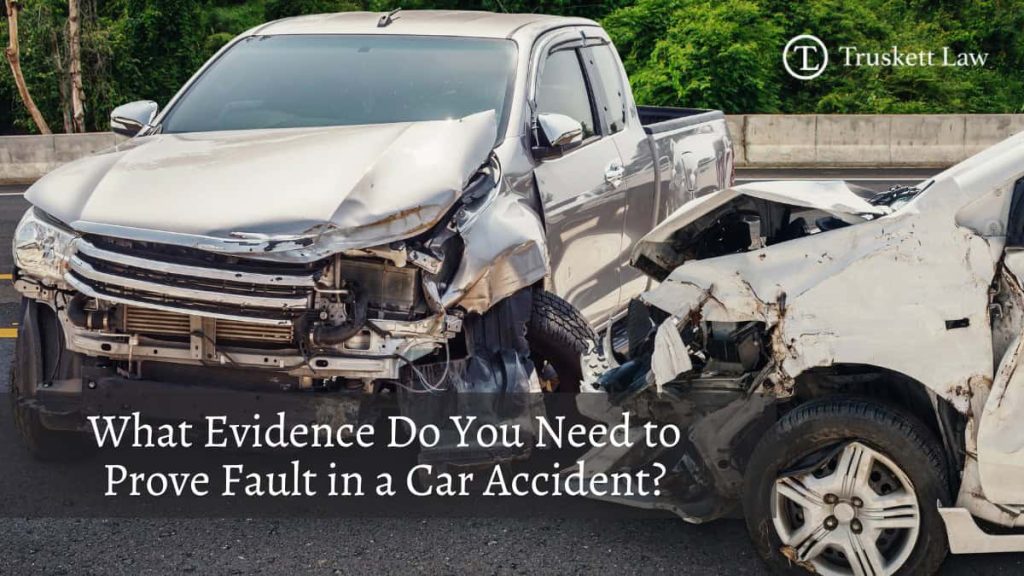
After a car accident, one of the most important questions that must be answered is: who was at fault? Determining liability is essential because it directly affects who is responsible for paying for medical bills, vehicle repairs, lost wages, and other damages.
While some accidents have obvious causes, many involve disputed facts, conflicting witness statements, or insurance companies attempting to minimize their financial responsibility.
The strength of your personal injury claim often depends on the quality and amount of evidence you can provide. The more evidence you have, the easier it becomes to establish negligence and pursue fair compensation.
At Truskett Law, we help accident victims gather, preserve, and present the evidence necessary to build strong personal injury claims. Understanding what evidence matters—and how to obtain it—can make a significant difference in the outcome of your case.
Why Proving Car Accident Fault Matters
In most car accident cases, the injured party must prove that another driver acted negligently and that this negligence caused the accident. Insurance companies do not automatically accept responsibility, even when fault may seem obvious. Instead, they investigate the circumstances surrounding the crash and look for reasons to reduce or deny compensation.
Proving fault affects not only who pays for damages but also the amount of compensation you may recover. Strong evidence helps establish liability, supports the severity of your injuries, and strengthens your negotiating position throughout the claims process.
Police Reports
One of the most important pieces of evidence in any car accident case is the police report. When law enforcement responds to an accident scene, officers document critical information, including:
- The date, time, and location of the accident
- Statements from drivers and witnesses
- Road and weather conditions
- Vehicle damage
- Traffic citations or violations
- The officer’s observations and preliminary assessment of fault
While a police report does not automatically determine liability, it often carries significant weight with insurance companies and courts. A detailed police report provides an objective account of what occurred and serves as a valuable starting point for an investigation.
Photographs and Video Evidence
Photos and videos taken immediately after an accident can provide powerful evidence. Visual documentation helps preserve conditions exactly as they existed at the time of the crash. Important images may include:
- Vehicle damage
- Skid marks
- Traffic signals and signs
- Road hazards
- Weather conditions
- Debris patterns
- Visible injuries
- The overall accident scene
Dashcam footage and surveillance video from nearby businesses or traffic cameras can be especially valuable. Video evidence often removes uncertainty by showing precisely how an accident occurred.
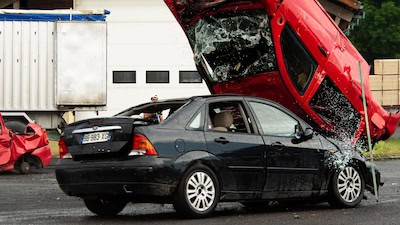
Witness Statements
Independent witnesses can play a critical role in proving fault. Unlike the drivers involved, witnesses generally have no financial interest in the outcome of the case, making their testimony highly credible. Witnesses may provide information about:
- Which driver had the right-of-way
- Whether speeding occurred
- Traffic signal changes
- Distracted driving behavior
- Reckless or aggressive driving
- Road and weather conditions
Collecting witness names and contact information immediately after the accident can significantly strengthen your claim. Memories fade over time, making prompt documentation important.
Medical Records
Medical evidence is essential not only for proving injuries but also for establishing that those injuries resulted from the accident. Medical documentation may include:
- Emergency room records
- Physician evaluations
- Diagnostic imaging
- Treatment plans
- Physical therapy records
- Prescription information
- Surgical reports
Seeking immediate medical treatment creates a direct connection between the accident and your injuries. Delaying treatment allows insurance companies to argue that your injuries were caused by something else or were not serious.
Vehicle Damage Analysis
The damage sustained by the vehicles involved often provides important clues about how the accident occurred. Insurance investigators and accident reconstruction experts frequently examine vehicle damage patterns to determine the force and direction of impact.
Vehicle evidence can help establish:
- Speed at impact
- Point of collision
- Driver positioning
- Severity of the crash
- Whether braking occurred
In some cases, preserving your vehicle before repairs begin may be necessary if fault is disputed.
Car Accident Reconstruction Experts
For serious or complex accidents, accident reconstruction specialists may be brought in to analyze evidence and determine exactly how the crash occurred. These experts evaluate:
- Skid marks
- Vehicle damage
- Road conditions
- Weather conditions
- Black box data
- Surveillance footage
- Witness testimony
Using scientific analysis and specialized software, accident reconstruction experts can recreate the sequence of events leading up to the collision. Their testimony often plays a significant role in disputed liability cases.
Electronic Vehicle Data
Many modern vehicles contain Event Data Recorders (EDRs), commonly called “black boxes.” These devices record valuable information in the moments before and during a crash. Black box data may reveal:
- Vehicle speed
- Brake usage
- Steering inputs
- Seat belt usage
- Airbag deployment
- Acceleration patterns
This electronic evidence can provide objective proof that supports or contradicts witness statements and driver accounts.
Cell Phone Records
Distracted driving is one of the leading causes of motor vehicle accidents. If there is reason to believe a driver was texting, calling, or using their phone at the time of the accident, cell phone records may become important evidence. Phone records can help determine whether a driver:
- Sent or received text messages
- Made phone calls
- Accessed apps
- Used GPS services
- Engaged with social media
Obtaining this information often requires legal action, which is one reason why early involvement of an attorney can be beneficial.
Traffic Camera and Surveillance Footage
Many intersections, businesses, and public areas are equipped with surveillance cameras that may capture accidents as they happen. Potential sources of video evidence include:
- Traffic cameras
- Security cameras
- Business surveillance systems
- Residential doorbell cameras
- Public transportation cameras
This footage may only be stored for a limited period, making quick action essential. An attorney can help identify and preserve available recordings before they are deleted.
Road and Weather Conditions
Environmental factors frequently contribute to accidents. Documenting road conditions can help establish whether another driver failed to operate their vehicle safely under existing circumstances. Important factors may include:
- Rain or snow
- Ice accumulation
- Construction zones
- Poor lighting
- Potholes
- Obstructed signage
- Standing water
Drivers have a duty to adjust their behavior according to road and weather conditions. Failing to do so may constitute negligence.
Traffic Violations and Citations
If the at-fault driver received a citation for speeding, reckless driving, running a red light, or another traffic violation, this can strengthen your claim.
While a citation alone does not automatically prove negligence, it can serve as persuasive evidence that the driver failed to exercise reasonable care. Courts and insurance companies often consider traffic violations when evaluating liability.
Your Personal Documentation
One of the most overlooked forms of evidence is your own documentation. Keeping detailed records after an accident can significantly support your case. Helpful records include:
- Pain journals
- Medical appointments
- Missed work days
- Prescription costs
- Communication with insurers
- Transportation expenses
- Recovery progress
A detailed record of your experience helps demonstrate the full impact of the accident on your life.

Comparative Fault and Shared Responsibility
In some accidents, more than one party may share responsibility. Many states apply comparative negligence rules, which means compensation may be reduced according to each person’s percentage of fault.
Strong evidence becomes even more important when comparative negligence is involved. Insurance companies often attempt to shift blame onto injured victims to reduce payouts. Thorough documentation helps protect against these tactics.
Why Timing Matters
Evidence can disappear quickly after a car accident. Witness memories fade, surveillance footage is deleted, and physical evidence may be lost or altered. Acting quickly helps preserve:
- Witness testimony
- Vehicle evidence
- Electronic records
- Video footage
- Medical documentation
The sooner an investigation begins, the stronger your case is likely to be.
How a Personal Injury Lawyer Can Help
Gathering and preserving evidence is often more complicated than many accident victims realize. Personal injury attorneys have access to investigators, accident reconstruction experts, medical professionals, and legal tools that can strengthen your case.
A lawyer can:
- Conduct a thorough investigation
- Preserve critical evidence
- Obtain expert testimony
- Negotiate with insurance companies
- Calculate the full value of your claim
- Prepare your case for trial if necessary
Having experienced legal representation can significantly improve your chances of obtaining fair compensation.
Build a Strong Car Accident Case From the Start
Proving fault in a car accident requires more than simply stating what happened. It requires evidence, documentation, investigation, and a clear understanding of how negligence laws apply to your case. The stronger your evidence, the stronger your ability to recover compensation for your injuries, lost income, and other damages.
At Truskett Law, we work closely with accident victims to gather critical evidence, challenge insurance company tactics, and pursue the compensation they deserve. If you’ve been injured in a car accident, don’t wait to protect your rights.
Contact our team today to learn how our team can help you build the strongest possible case and move forward with confidence.
Frequently Asked Questions
What evidence is most important for proving fault in a car accident?
Key evidence typically includes the police report, photos and video from the scene, witness statements, medical records, and any available electronic vehicle data or black box information.
Does a police report determine who was at fault in a car accident?
A police report doesn’t automatically determine liability, but it provides an objective account of the accident and often carries significant weight with insurance companies and courts.
What is a black box and what does it record in a car accident?
A black box, or Event Data Recorder, is found in many modern vehicles and can record information like vehicle speed, brake usage, steering inputs, and seat belt use in the moments before and during a crash.
How does comparative negligence affect a car accident claim?
Comparative negligence rules mean that if more than one party shares responsibility for an accident, compensation may be reduced according to each person’s percentage of fault.
Why is it important to gather evidence quickly after a car accident?
Evidence can disappear quickly, since witness memories fade, surveillance footage is often deleted, and physical evidence can be lost or altered over time.
