
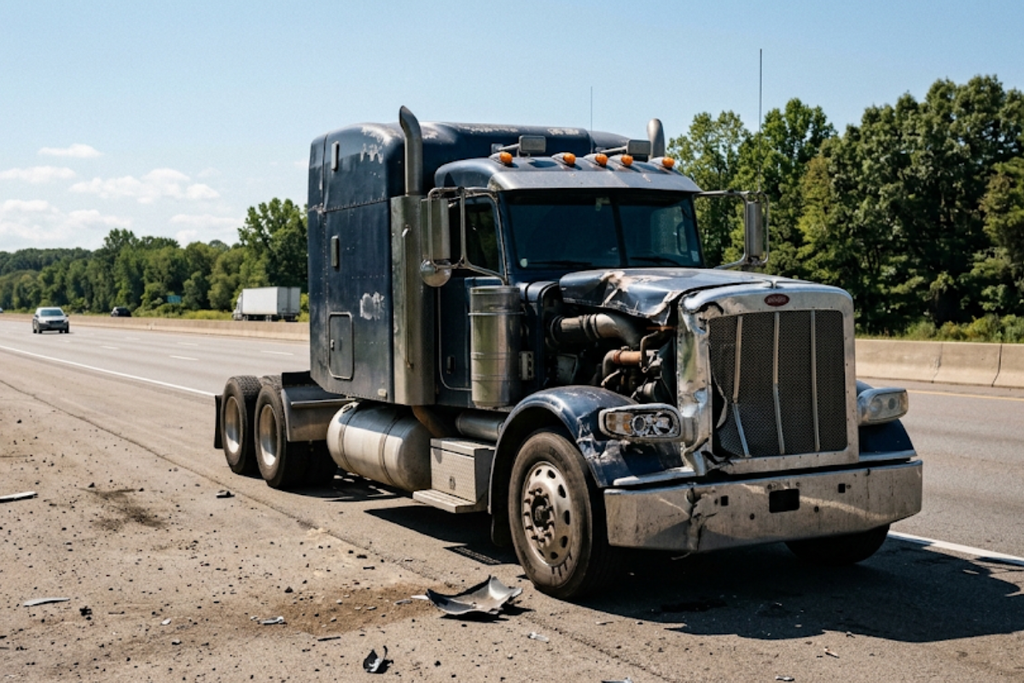
$750,000 is the federal minimum liability insurance a motor carrier must carry to haul general freight in interstate commerce, and that number has not moved since 1980 even as medical costs and vehicle values have climbed for decades (minimum insurance). For a Tulsa, Oklahoma family facing hospital bills after a collision with an 80,000-pound rig, that figure says a lot about what stands between an injured person and fair compensation: a well-insured, well-lawyered corporate defendant. So is it hard to win a lawsuit against a trucking company? Yes, it is generally harder than a typical two-car accident claim, but it is far from impossible once the right evidence is locked down early and the right legal theories are put to work.
What Makes a Trucking Case Different From an Ordinary Car Wreck
A crash involving a passenger car usually comes down to who ran the red light or who failed to yield. A crash involving a commercial truck adds several more layers. The carrier likely has its own claims department, an outside insurance adjuster, and often outside defense counsel involved within hours of the wreck. In 2023 alone, an estimated 528,177 large trucks were involved in police-reported crashes nationwide, and large trucks accounted for 9 percent of vehicles in fatal crashes despite making up only 5 percent of registered vehicles on the road (truck crash data). That volume means trucking companies and their insurers have well-practiced systems for responding to claims, and those systems are built to limit payouts, not maximize them.
Federal rules add another layer of complexity. Motor carriers and drivers must follow detailed hours-of-service rules limiting how long a driver can be behind the wheel, along with maintenance, inspection, and driver qualification standards set by the Federal Motor Carrier Safety Administration. Proving a violation of one of these rules can turn a case, but finding that proof usually requires knowing where to look and how fast to move.
Is It Hard To Win a Lawsuit Against a Trucking Company? Breaking Down the Real Obstacles
The honest answer depends on how quickly a few key things happen after the crash. Below is a breakdown of the challenges that make these cases tougher than an average accident claim, and how each one is typically addressed when a case is handled properly.
| Common Challenge | How It Is Typically Addressed |
|---|---|
| Evidence disappears fast (ELD and black box data can be overwritten) | Sending a rapid written evidence preservation request to the carrier |
| Corporate defense teams often respond within hours | Starting a prompt, parallel investigation on the victim’s side |
| Complex federal regulations (FMCSA rules) govern liability | Building regulatory-based negligence theories tied to specific violations |
| Multiple layers of insurance and corporate entities may apply | Investigating all available policies and related companies for full coverage |
| Some states have passed laws making these lawsuits harder to win | Understanding Oklahoma’s specific rules and how they apply to the case |
Each of those obstacles shows up in real cases. Electronic logging devices and event data recorders, often called black boxes, can hold information about speed, braking, and driving hours in the moments before a crash, but many systems only retain that data for a limited window before it cycles out or gets overwritten. Corporate defense teams tied to national carriers do move quickly, sometimes reaching out to witnesses or securing the truck for repair before an injured person has even left the hospital. Federal trucking regulations create a maze of rules around hours of service, drug testing, and vehicle maintenance that most people never need to think about until a crash happens. And multiple insurance layers, since a carrier, a truck owner, and a cargo company might all carry separate policies, mean a full investigation is needed to find every source of available coverage. On top of that, ProPublica reporting has documented that several states have passed laws in recent years specifically designed to make it harder for crash victims to sue trucking companies or to cap what they can recover, even as truck crash deaths have risen sharply over the past decade.
Evidence That Can Make or Break a Trucking Lawsuit
Winning a trucking case usually comes down to whether the right evidence was captured before it vanished. That typically includes:
- Electronic logging device records showing the driver’s hours and driving time leading up to the crash
- Event data recorder or black box data showing speed, braking, and steering inputs
- The driver’s qualification file, training records, and drug and alcohol testing history
- Maintenance and inspection logs for the specific truck involved
- Dashcam or nearby surveillance footage from the scene, if it exists
Every one of these pieces of evidence is time-sensitive. A written request demanding that the carrier preserve this material, sent as soon as possible after the crash, is often what separates a claim that can be proven from one that turns into a dispute over who said what. If a truck crash has left you or a family member dealing with serious injuries and mounting medical bills, getting a knowledgeable set of eyes on the evidence early matters more than almost anything else in the case.
Why Choose Truskett Law
A case involving a commercial trucking company is often decided in the first few weeks after the crash. Truskett Law moves quickly to send preservation letters demanding that a carrier hold onto electronic logging device data, black box recordings, and driver qualification files before routine data cycling has a chance to erase them. Because federal trucking regulations create specific duties around hours of service, vehicle maintenance, and driver qualification, each violation found in a carrier’s own records can become an independent basis for a negligence claim rather than relying only on eyewitness accounts of the crash itself. Every trucking case is prepared with the expectation that it will be met by a defense team backed by a large insurance carrier and, often, outside trial counsel, because that is typically what a driver in Tulsa is up against once a claim moves forward. Working from Tulsa, Oklahoma, Truskett Law handles these cases on a contingency basis, meaning there is no fee unless the case results in a recovery, and the initial consultation to review a case costs nothing.
Steps To Protect a Truck Accident Claim
A few early decisions can make a real difference in how a trucking case turns out. Consider these steps after any collision with a commercial truck:
- Seek medical evaluation right away, even if injuries seem minor at first
- Avoid giving a recorded statement to the trucking company’s insurer without guidance
- Photograph the vehicles, the scene, and any visible cargo or placards on the truck
- Keep a written record of doctor visits, missed work, and out-of-pocket costs
- Reach out to an attorney quickly so evidence preservation requests can go out fast
These same principles apply whether the crash involved a semi-truck, a delivery van, or another type of commercial vehicle, and they line up closely with the kind of proof needed in proving negligence in personal injury cases more broadly, since fault still has to be documented and connected to the injuries claimed.
Conclusion
Is it hard to win a lawsuit against a trucking company? It is harder than most car accident claims, but the outcome usually comes down to speed and preparation rather than luck. Trucking companies carry federally required insurance, follow federal safety regulations, and typically respond to a crash with an experienced claims team, all of which means a victim’s case needs strong evidence gathered quickly to stand up against that kind of defense. For anyone in Tulsa, Oklahoma dealing with the aftermath of a semi-truck accident, understanding these obstacles early, and getting help preserving evidence before it disappears, can make the difference between a claim that stalls and one that results in real accountability.
Ready to talk about your truck accident case? Request a free consultation with Truskett Law today.
Frequently Asked Questions
Is it hard to win a lawsuit against a trucking company?
It is generally more difficult than a standard car accident claim because trucking companies carry substantial insurance and often respond with experienced defense teams. That said, cases built on solid evidence, such as electronic logging device data, maintenance records, and documented regulation violations, are won regularly.
What is the statute of limitations for a truck accident lawsuit in Oklahoma?
Oklahoma law generally allows two years from the date of the crash to file a personal injury lawsuit. Missing that window typically bars the claim entirely, so it is important not to wait to start gathering evidence and understanding the deadline that applies to a specific case.
Can I still sue a trucking company if I was partly at fault for the crash?
In many cases, yes, partial fault does not automatically prevent a recovery. Oklahoma follows a modified comparative negligence rule, meaning a person can still recover damages as long as they are not found more than 50 percent at fault, though any award may be reduced by their share of responsibility.
What evidence matters most in a truck accident lawsuit?
Electronic logging device data, black box recordings, driver qualification files, and maintenance records tend to matter most because they show what actually happened rather than relying only on memory or eyewitness accounts. Preserving this evidence quickly, before it can be overwritten or discarded, is often the single most important factor in the case.
Do most truck accident lawsuits settle before trial?
Many personal injury cases involving commercial trucks do resolve through settlement rather than a trial verdict, particularly once liability and damages are well documented. Whether a case settles or proceeds to trial depends heavily on the strength of the evidence and how willing the carrier’s insurer is to offer fair compensation.
