
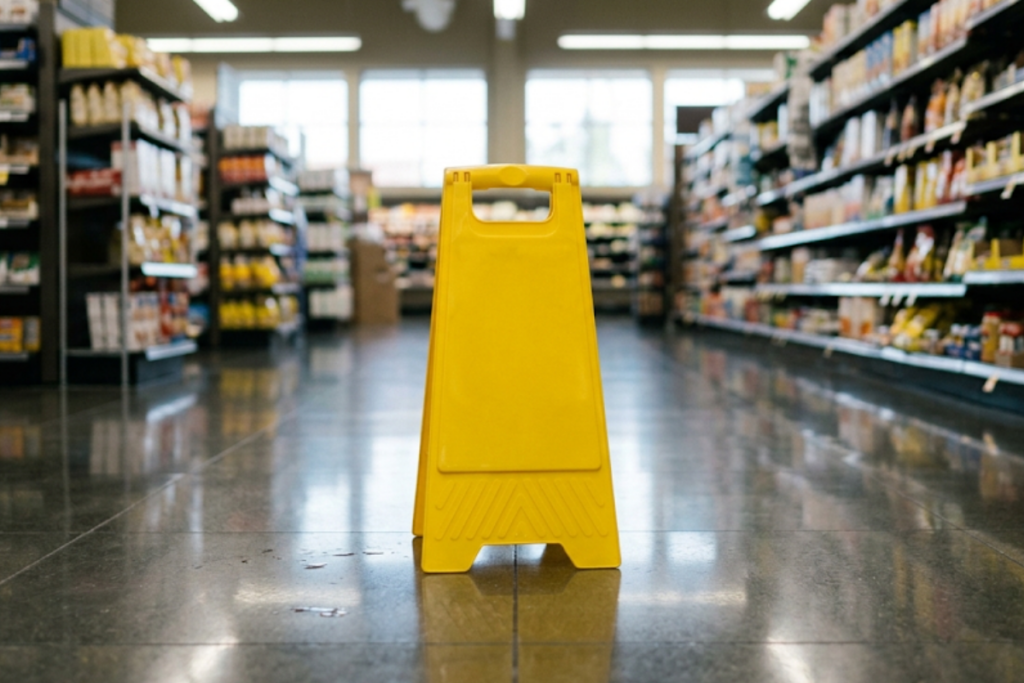
A puddle of melted ice near the frozen food section put a Tulsa shopper on the floor in under two seconds last spring, and she never saw it coming until her feet were already sliding out from under her. If you slipped and fell at a store and you’re now asking yourself, “I slipped and fell at a store, what are my rights?”, you’re asking exactly the right question at exactly the right time, because Oklahoma law gives injured customers real options, but the evidence that proves your case can disappear within days.
I Slipped and Fell at a Store, What Are My Rights in Oklahoma?
When you walk into a grocery store, big-box retailer, restaurant, or strip mall shop in Tulsa, the law treats you as an invitee, meaning the property owner invited the public in for business purposes and, in exchange, owes you a duty of reasonable care. That duty covers the premises itself: floors, entryways, stairwells, parking lots, and aisles all have to be kept reasonably free of hazards the store knows about or should have discovered through routine inspection. If a store fails that duty and you get hurt as a result, you generally have the right to seek compensation for medical bills, lost wages, and pain and suffering. You are not automatically entitled to a payout just because you fell; Oklahoma requires proof that the store was negligent, not simply that an accident happened on its floor.
What Stores Are Legally Required to Do to Keep Aisles Safe
Retailers aren’t held to a standard of perfection, but they are expected to run a reasonably safe operation. That typically means scheduled floor inspections, prompt cleanup of spills, wet floor signage during mopping or bad weather, secured mats and rugs, working lighting in aisles and stairwells, and clear walkways free of stray merchandise. Federal workplace safety standards reinforce how seriously slip and fall hazards are taken across general industry, and OSHA’s safety standards for walking and working surfaces spell out the kind of housekeeping and hazard-control practices responsible businesses are expected to follow. When a Tulsa store skips these basics and a customer gets hurt, that gap between what should have happened and what actually happened is often the heart of a negligence claim.
How Common (and Costly) These Falls Really Are
Same-level falls, the kind that happen when someone slips on a wet floor or trips over debris rather than falling from a height, cost businesses billions of dollars a year in claims and lost productivity according to industry safety data. The National Floor Safety Institute has tracked same-level falls as one of the most expensive categories of preventable injury nationwide, which is part of why large retailers invest so heavily in floor maintenance programs and incident documentation in the first place. That investment cuts both ways for an injured shopper: it means the records proving what happened usually exist, but it also means a well-prepared store and its insurer will fight to keep those records favorable to them.
Who Gets Hurt Most, and How Severe These Injuries Can Be
Anyone can slip and fall at a store, but the consequences skew heavily toward older adults. National falls data shows millions of emergency department visits and hundreds of thousands of hospitalizations for fall-related injuries among older adults every year, with hip fractures and head injuries among the most serious outcomes. Younger shoppers aren’t immune either; wrist fractures, torn ligaments, herniated discs, and concussions are all common results of a hard fall on a commercial floor. The severity of the injury matters for your claim, because it directly shapes the medical treatment, recovery time, and financial losses you’re entitled to recover.
| Hazard in the Store | Evidence That Can Prove Notice |
|---|---|
| Wet or freshly mopped floor with no warning sign | Maintenance logs, cleaning schedules, and timestamped surveillance footage showing how long the spill sat |
| Torn or bunched floor mat or rug | Prior incident reports and maintenance work orders for that mat or entrance |
| Cracked tile, warped flooring, or a broken step | Repair records, vendor invoices, and photos tied to earlier customer complaints |
| Merchandise or boxes left in an aisle | Employee stocking schedules, witness statements, and footage timestamps |
| Broken or flickering aisle lighting | Maintenance tickets, work orders, and prior complaint logs about the same fixture |
Proving the Store Knew About the Hazard
That table points to the legal issue that decides most store slip and fall cases: notice. Oklahoma law generally requires you to show the store had actual notice of the hazard (an employee saw the spill and did nothing) or constructive notice (the hazard existed long enough that a reasonably careful store should have found and fixed it). A wet floor with no warning sign points to maintenance logs and footage showing how long it sat there. A torn mat or bunched rug points to prior incident reports for that same entrance. Cracked tile or a broken step points to repair records and past complaints. Boxes left in an aisle point to stocking schedules and witness statements. Flickering or dead lighting points to maintenance tickets and earlier complaint logs about that fixture. Without one of these threads connecting the hazard to something the store knew or should have known, even a serious injury can be hard to turn into a successful claim.
What to Do in the First 48 Hours After You Slipped and Fell at a Store
Falls are especially dangerous for older shoppers, and national safety data shows fall-related deaths among older adults have climbed sharply over the past decade, which is one more reason not to brush off a hard fall as “just a bruise.” What you do in the first two days shapes the entire claim.
- Report the fall to store management immediately and ask for a copy of the written incident report before you leave.
- Photograph the hazard, the surrounding area, and your injuries before anything gets cleaned up or moved.
- Get names and contact information for any customers or employees who saw what happened.
- Seek medical care the same day, even if the pain feels minor at first; some injuries, like concussions and soft tissue damage, worsen over the following days.
- Keep the shoes and clothing you were wearing, and avoid giving a recorded statement to the store’s insurance company until you understand your rights.
How Long Do You Have to File a Claim in Oklahoma?
Oklahoma generally gives injury victims two years from the date of the fall to file a personal injury lawsuit, though claims involving government-owned property, like a city-owned building or a store on municipal land, come with much shorter notice deadlines that can run out in a matter of months. Oklahoma also follows a modified comparative negligence rule, meaning your compensation can be reduced by your percentage of fault, and you’re barred from recovering anything if you’re found more than 50 percent responsible. That’s why building a clear negligence case, showing duty, breach, causation, and damages the way our step-by-step guide to proving negligence walks through, matters just as much as filing on time.
Why Choose Truskett Law After a Slip and Fall at a Tulsa Store
Store slip and fall cases are usually won or lost in the details that vanish fastest: surveillance footage that gets overwritten on a rolling loop, incident reports that get filed away and forgotten, and maintenance logs that quietly disappear once a store realizes a claim is coming. Our approach starts by treating that evidence like it’s already on a countdown clock. We send preservation letters, request maintenance and inspection records, pull incident report histories, and track down surveillance footage before it’s recorded over or discarded, because that documentation is often the difference between a store admitting it had notice of a hazard and a store denying everything ever happened. We built this process around how Tulsa retailers, grocery chains, and property managers actually operate, from their cleaning schedules to their internal reporting systems, so we know where the proof usually lives and how quickly to go get it. Truskett Law handles store slip and fall cases on a contingency basis, so there’s no upfront cost to have your case reviewed, and you owe nothing unless we recover compensation for you.
Moving Forward After a Store Slip and Fall in Tulsa
If there’s one rule of thumb worth remembering, it’s this: document everything you can in the first 48 hours and get medical care the same day, because the evidence that proves a Tulsa store knew about a hazard has a shelf life, and so does your legal deadline to act. Most claims resolve through negotiation with the store’s insurer rather than a courtroom trial, and timelines vary widely depending on how quickly records are secured and how clear the notice evidence turns out to be. You don’t have to sort out what counts as strong evidence or figure out Oklahoma’s comparative fault rules on your own.
Contact Truskett Law for a Free Case Review After Your Store Fall
Frequently Asked Questions
What should I do right after I slip and fall in a store?
Report the fall to a manager, ask for a written incident report, photograph the hazard and your injuries, get witness contact information, and see a doctor the same day. Prompt documentation makes it much easier to connect your injury to a specific hazard later.
Do I need a lawyer for a store slip and fall injury?
It depends on the severity of your injury and how clearly the store’s negligence caused it. Minor injuries with obvious store fault sometimes resolve without a lawyer, but claims involving significant medical treatment, disputed liability, or a lowball insurance offer usually benefit from legal representation.
How long do I have to file a slip and fall claim in Oklahoma?
Oklahoma generally allows two years from the date of the fall to file a personal injury lawsuit. Claims against government-owned property have much shorter notice deadlines, sometimes just a few months, so it’s important to identify the property owner quickly.
What do I have to prove to win a store slip and fall claim?
You generally need to show the store owed you a duty of care, breached that duty by allowing a hazard to exist, and that the hazard directly caused your injury and resulting damages. A key piece is notice: proving the store knew or should have known about the hazard and failed to fix or warn about it.
Will I still be able to recover money if I was partly at fault for falling?
Possibly. Oklahoma follows a modified comparative negligence rule, which reduces your compensation by your percentage of fault and bars recovery entirely if you’re found more than 50 percent responsible. Being distracted or not watching where you were walking can factor into that percentage, so the details of how the fall happened matter.
