
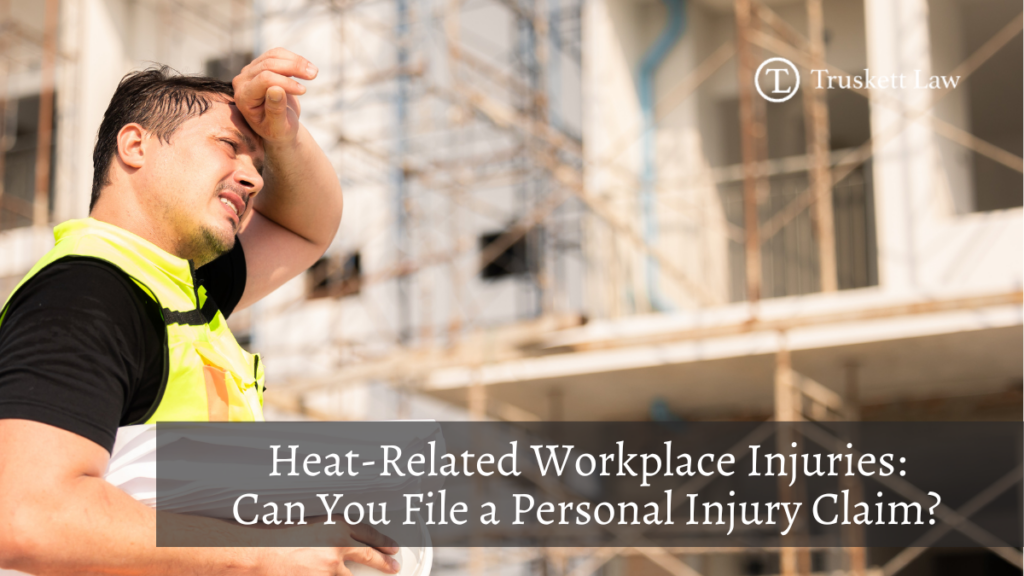
Working outdoors or in high-temperature environments can be physically demanding, especially during the hottest months of the year. Construction workers, landscapers, warehouse employees, agricultural workers, delivery drivers, roofers, and many others face increased risks of heat-related illnesses and injuries every day.
While employers have a responsibility to provide a reasonably safe work environment, heat-related injuries still occur far too often and can have serious, even life-threatening, consequences.
If you’ve suffered a heat-related injury on the job, you may be wondering whether you’re limited to workers’ compensation or if you have the right to file a personal injury claim. The answer depends on the circumstances surrounding your injury.
At Truskett Law, we help injured workers understand their legal rights and explore every available avenue for compensation. Here’s what you need to know.
Understanding Heat-Related Workplace Injuries
Heat-related illnesses occur when the body cannot properly regulate its temperature. Prolonged exposure to high temperatures, humidity, direct sunlight, or physically demanding work can quickly overwhelm the body’s cooling system.
Common heat-related injuries and illnesses include:
- Heat exhaustion
- Heat stroke
- Heat cramps
- Heat rash
- Dehydration
- Heat syncope (fainting)
- Kidney damage caused by prolonged dehydration
Without prompt treatment, these conditions can lead to permanent injuries, organ damage, or even death. Recognizing the warning signs early can help prevent more serious medical complications.

Who Is Most at Risk?
Certain workers face a much greater risk of heat-related injuries because of the nature of their jobs. Employees who spend long hours outdoors or in hot indoor environments often experience prolonged exposure to dangerous temperatures.
High-risk occupations include:
- Construction workers
- Road crews
- Roofers
- Farmers and agricultural workers
- Landscapers
- Factory employees
- Warehouse workers
- Utility workers
- Delivery drivers
- Oil and gas workers
New employees and workers returning after time away may also be at greater risk because their bodies have not yet adjusted to working in hot conditions.
Common Causes of Heat-Related Workplace Injuries
Many workplace heat injuries are preventable. They often result from unsafe working conditions or inadequate safety procedures. Some common contributing factors include:
- Lack of drinking water
- Insufficient rest breaks
- Long hours in direct sunlight
- Inadequate ventilation
- Heavy protective clothing
- Failure to train workers about heat illness
- Pressure to continue working despite symptoms
Employers who ignore these hazards may place workers at unnecessary risk.
Employer Responsibilities
Employers have a legal duty to provide a reasonably safe workplace. While specific requirements vary by industry and state, employers are generally expected to take reasonable steps to reduce heat-related risks. These may include:
- Providing access to clean drinking water
- Allowing regular rest breaks
- Offering shaded or air-conditioned recovery areas
- Monitoring weather conditions
- Adjusting work schedules during extreme heat
- Training employees to recognize heat illness symptoms
- Developing emergency response procedures
When employers fail to implement reasonable safety measures, serious injuries can occur.
Workers’ Compensation vs. Personal Injury Claims
In many workplace injury cases, workers’ compensation provides benefits regardless of who was at fault. Workers’ compensation typically covers:
- Medical treatment
- Partial wage replacement
- Rehabilitation services
- Permanent disability benefits in qualifying cases
However, workers’ compensation generally prevents employees from suing their employer directly for negligence. There are important exceptions, particularly when another party contributed to the injury.
Understanding the difference between workers’ compensation and a personal injury claim is critical when evaluating your legal options.
When Can You File a Personal Injury Claim?
Although workers’ compensation may be your primary remedy, there are situations where a personal injury claim may also be available. Examples include:
Third-Party Negligence
If someone other than your employer contributed to your injury, you may have a separate personal injury claim. This could include:
- A negligent subcontractor
- A property owner
- Equipment manufacturers
- Maintenance companies
- Vendors working at the job site
A third-party claim may allow you to recover damages beyond what workers’ compensation provides.
Defective Equipment
If faulty cooling equipment, defective protective gear, or malfunctioning machinery contributed to your heat-related injury, the manufacturer may be legally responsible. Product liability claims can provide compensation when unsafe products contribute to workplace injuries.
Unsafe Property Conditions
Property owners have a responsibility to maintain reasonably safe premises. If unsafe property conditions contributed to your heat injury, the property owner may be liable under premises liability laws.

Proving Negligence in a Personal Injury Case
To succeed in a personal injury claim, you generally must prove that another party acted negligently. This typically requires establishing:
- A duty of care
- A breach of that duty
- A direct connection between the negligence and your injury
- Actual damages
Evidence plays a major role in proving each of these elements.
Evidence That Can Strengthen Your Claim
Strong documentation is essential after any workplace injury. Helpful evidence may include:
- Medical records
- Incident reports
- Workplace photographs
- Weather reports
- Witness statements
- Training records
- Safety inspection reports
- Equipment maintenance logs
- Employment records
- Expert testimony
The more documentation available, the stronger your case may become.
Seek Medical Attention Immediately
Heat-related illnesses can worsen rapidly if left untreated. Even if symptoms appear mild initially, seek medical care as soon as possible. Medical records not only protect your health but also establish important documentation connecting your condition to your workplace exposure.
Follow all treatment recommendations and attend follow-up appointments to support both your recovery and your legal claim.
Report the Injury Promptly
Notify your supervisor or employer as soon as possible after the incident. Prompt reporting:
- Creates an official record
- Preserves important facts
- Helps avoid disputes
- Supports workers’ compensation claims
Delays in reporting may give insurance companies an opportunity to question whether the injury actually occurred at work.
Keep Detailed Records
Maintain copies of every document related to your injury. This includes:
- Medical bills
- Prescription receipts
- Travel expenses
- Lost wage information
- Correspondence with insurance companies
- Employer communications
Keeping organized records can make the claims process significantly smoother.
Challenges You May Face
Insurance companies sometimes argue that heat-related illnesses developed outside of work or were caused by pre-existing medical conditions. They may also claim:
- You failed to stay hydrated.
- Your symptoms were unrelated to workplace conditions.
- Your injury was not serious.
- You waited too long to report the illness.
An experienced attorney can help gather evidence to overcome these defenses and protect your claim.
Compensation Available Through a Personal Injury Claim
If a third party is responsible for your heat-related workplace injury, you may be able to recover compensation for:
- Medical expenses
- Future medical treatment
- Lost wages
- Reduced earning capacity
- Pain and suffering
- Emotional distress
- Permanent disability
- Loss of quality of life
Every case is different, and the value of a claim depends on the severity of the injuries and the circumstances surrounding the incident.
How a Personal Injury Lawyer Can Help
Workplace injury claims involving third-party negligence can quickly become complicated. Multiple insurance companies, employers, and contractors may all be involved. A personal injury attorney can:
- Investigate the circumstances of your injury
- Identify all potentially liable parties
- Preserve critical evidence
- Work with medical experts
- Negotiate with insurance companies
- File a lawsuit when necessary
Having legal representation helps ensure that no potential source of compensation is overlooked. An attorney can also explain how a personal injury claim may interact with your workers’ compensation benefits and help protect your financial recovery throughout the process.
Know Your Rights After a Heat-Related Injury
Heat-related workplace injuries can have lasting physical, emotional, and financial consequences. While workers’ compensation provides important benefits, it may not always be your only option. If another person’s negligence contributed to your injury, you may have the right to pursue additional compensation through a personal injury claim.
At Truskett Law, we are committed to helping injured workers understand their legal options and pursue the compensation they deserve. Our experienced team will investigate your case, determine whether a third party may be liable, and advocate for your best interests every step of the way.
If you’ve suffered a heat-related workplace injury, contact our team today to discuss your case and learn how we can help you move forward with confidence.
