
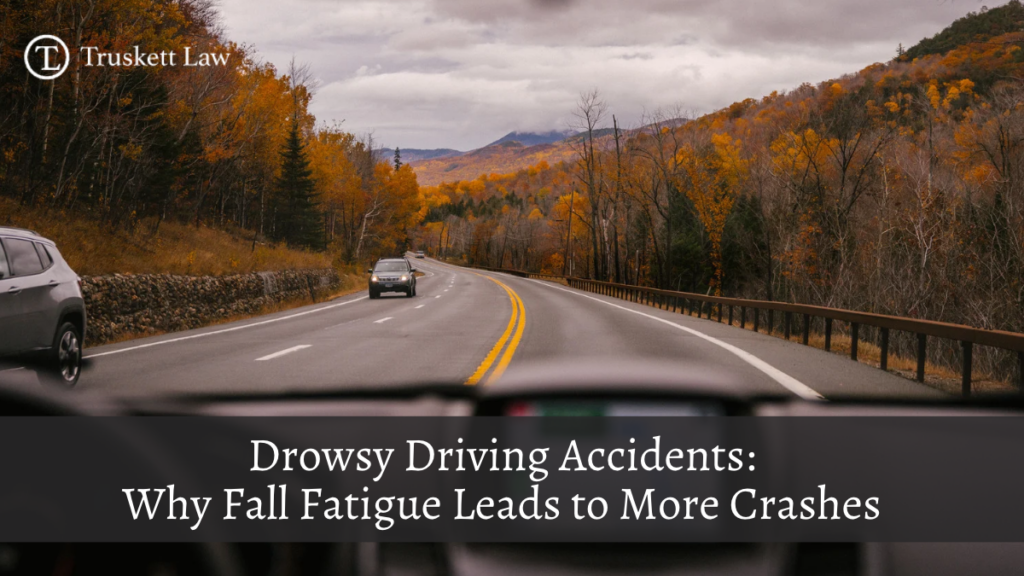
Fall brings cooler temperatures, shorter days, busy school schedules, and holiday travel plans. However, seasonal changes can also contribute to driver fatigue. Disrupted sleep routines, longer commutes in darkness, and packed schedules can leave drivers struggling to stay alert behind the wheel. When fatigue affects reaction time and judgment, the risk of a serious car accident increases.
Drowsy driving is dangerous because it can impair a person’s ability to operate a vehicle safely. A tired driver may struggle to recognize hazards, maintain a consistent speed, or react when traffic suddenly slows down. In severe cases, drivers may briefly fall asleep without realizing it.
Understanding why fall fatigue increases the risk of drowsy driving accidents can help motorists make safer decisions. It is also important to know what steps to take if you are injured by a fatigued driver.
Why Fall Fatigue Can Make Driving More Dangerous
Several seasonal changes can affect alertness and driving habits during autumn. Although drowsy driving accidents happen throughout the year, fall can introduce circumstances that make staying awake and focused more difficult.
Shorter Days and Changing Light Conditions
As fall progresses, daylight hours decrease. Many people begin commuting before sunrise or driving home after sunset. Reduced visibility can make pedestrians, cyclists, animals, and roadway hazards harder to see.
Driving in darkness already requires additional attention. When a driver is tired, recognizing hazards and responding quickly can become even more difficult. The transition away from daylight saving time may also temporarily disrupt sleep schedules for some people, affecting alertness during daily commutes.
Busy Schedules and Sleep Disruptions
Fall often brings packed calendars filled with school activities, work responsibilities, sporting events, and family commitments. When people have too much to do and too little time to rest, sleep may become a lower priority.
Irregular sleep schedules and insufficient rest can leave drivers mentally and physically exhausted. Even people who normally drive safely may experience reduced concentration when they get behind the wheel without enough sleep.
How Drowsy Driving Causes Car Accidents
Fatigue affects several abilities drivers need to operate vehicles safely. A tired driver may appear awake but still experience slower reactions, reduced awareness, and impaired decision-making.
Common effects of drowsy driving include:
- Slower reaction times: A fatigued driver may take longer to brake or steer away from danger.
- Reduced concentration: It becomes harder to monitor traffic, notice road signs, and remain aware of surrounding vehicles.
- Poor judgment: Sleep deprivation can affect decisions about speed, following distance, and passing.
- Lane drifting: Tired drivers may struggle to maintain their lane or control their vehicles consistently.
These effects can contribute to rear-end collisions, sideswipe accidents, head-on crashes, and single-vehicle wrecks. A drowsy driver may fail to brake or correct their steering in time to avoid a collision.
Coffee, loud music, and open windows cannot reliably prevent a driver from falling asleep. Anyone struggling to stay awake should stop driving as soon as it is safe and arrange another way to reach their destination.
Warning Signs of Drowsy Driving
Recognizing fatigue before driving can help prevent serious accidents. However, drivers do not always realize how much their alertness has declined.
Warning signs include:
- Frequent yawning or blinking
- Heavy eyelids or difficulty keeping the eyes open
- Trouble remembering the last few miles driven
- Missing road signs or exits
- Drifting out of a lane
- Hitting roadway rumble strips
- Difficulty focusing or keeping the head upright
Drivers who notice these symptoms should not assume they can safely push through. Pulling over somewhere safe and resting or finding another driver is a better choice than risking a crash.
Who Is Most at Risk for Fatigue-Related Crashes?
Any driver can become drowsy, but certain circumstances increase the risk of fatigue-related accidents.
Long-distance drivers may become tired after hours on the highway, particularly when they do not take regular breaks.
Night and early-morning drivers may struggle to remain alert during the body’s natural low-alertness periods, especially if they have not slept enough.
Shift workers often face irregular schedules that make consistent, restorative sleep difficult.
Commercial drivers may spend extended periods on the road. Although federal regulations establish driving and rest requirements for many commercial motor vehicle operators, fatigue remains a potential safety concern.
Drivers with sleep disorders may experience excessive daytime sleepiness when conditions such as sleep apnea interfere with restorative sleep.
These circumstances do not automatically establish liability after a collision. However, a driver’s schedule, knowledge of their fatigue, and ability to remain alert may be relevant when investigators determine what happened.
Is Drowsy Driving Negligence?
Drowsy driving may constitute negligence when a driver’s failure to use reasonable care contributes to a crash. Drivers are expected to operate their vehicles safely and respond appropriately to roadway conditions.
If someone knows they are too tired to drive safely but continues anyway, that decision may be considered when determining responsibility for an accident. Evidence that a driver fell asleep, drifted across lanes, or failed to respond to traffic may also help establish how the collision occurred.
However, fatigue alone does not automatically prove negligence. Investigators must evaluate the available evidence, the circumstances of the crash, and applicable state law.
How to Prove a Drowsy Driving Accident Claim
Proving that a driver was fatigued can be challenging because drowsiness does not always produce a clear test result. Evidence from the scene and the driver’s behavior may help establish what happened.
Potential evidence includes:
- Police accident reports: Officers may document statements, observations, and possible signs of fatigue.
- Witness statements: Other motorists or passengers may have noticed a driver weaving, nodding off, or failing to react.
- Vehicle and crash evidence: Vehicle damage, skid marks, and electronic vehicle data may help reconstruct the collision.
- Dash cam or surveillance footage: Video may show a vehicle drifting between lanes or failing to brake.
- Driver statements: Admissions about being exhausted, staying awake for extended periods, or falling asleep may be relevant.
- Work and driving records: In some cases, schedules and trip logs may help establish how long a driver had been working or driving.
Not every case will involve all these forms of evidence. The most useful information depends on the circumstances of the accident and what investigators can obtain.
If you are injured in a suspected drowsy driving accident, preserve photographs, witness contact information, and other relevant records. Evidence may become harder to obtain as time passes, so documenting what you can safely collect is important.
What Compensation May Be Available After a Drowsy Driving Accident?
When a fatigued driver’s negligence causes a collision, an injured person may be able to pursue compensation through an insurance claim or personal injury lawsuit, depending on the circumstances and applicable law.
Potential damages may include:
- Medical expenses and future treatment costs
- Lost wages during recovery
- Reduced future earning capacity
- Physical pain and suffering
- Emotional distress
- Rehabilitation expenses
The compensation available depends on the severity of the injuries, their impact on daily life, the evidence supporting the claim, and applicable law. Insurance coverage and questions about fault may also affect the outcome.
What to Do After a Suspected Drowsy Driving Accident
If you are involved in a collision that may have been caused by a fatigued driver, prioritize safety and medical care.
- Call 911 when necessary. Report the accident and request emergency assistance for anyone who may be injured.
- Seek medical attention. Some injuries are not immediately apparent. Prompt evaluation can identify injuries and document treatment.
- Document the scene if it is safe. Photograph vehicle damage, roadway conditions, and visible injuries.
- Collect witness information. Names and contact details may help investigators understand what happened.
- Keep relevant records. Save medical bills, treatment instructions, missed-work documentation, and insurance communications.
- Be careful when discussing fault. Provide accurate information, but avoid guessing about the cause before the facts are clear.
You do not need to prove the other driver was drowsy at the scene. Focus on safety, medical care, and preserving information that may help establish what happened.
Understand Your Options After a Fatigue-Related Crash
Fall fatigue can make everyday driving more dangerous, particularly when shorter days and busy schedules leave people with less time to rest. Drowsy driving can slow reaction times, impair judgment, and cause drivers to lose control of their vehicles. When a fatigued driver’s negligence causes an accident, injured people may face medical expenses, lost income, and a difficult recovery.
At Truskett Law, injured individuals can learn about their legal options after a serious car accident. Understanding how the crash happened, identifying potentially responsible parties, and preserving relevant evidence can help clarify the next steps.
If you or a loved one has been injured in a suspected drowsy driving accident, seeking legal guidance can help you understand your rights and determine how to move forward.
