
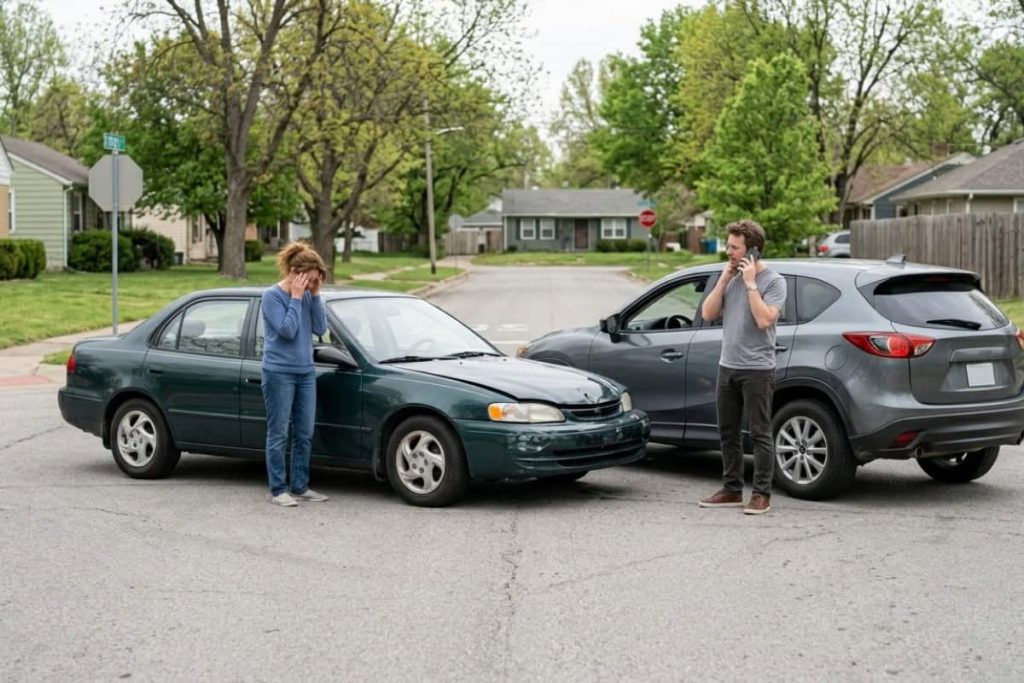
Can I sue if I was partially at fault for the accident in Oklahoma? This is one of the most misunderstood questions in personal injury law, and the answer is more encouraging than most people expect. Being partially responsible for an accident does not necessarily bar you from seeking compensation in Oklahoma. The state follows a specific legal framework that determines what happens when more than one party shares blame — and understanding that framework could be the difference between walking away with nothing and recovering a meaningful portion of your damages.
How Oklahoma Handles Shared Fault: Comparative Negligence
Oklahoma follows what is known as the modified comparative negligence rule, also called the “51% rule.” Under this system, you can still recover compensation as long as you are found to be 50% or less at fault for the accident. If you are found to be 51% or more at fault, you are barred from recovering anything. If your fault falls at or below 50%, your compensation is reduced proportionally by your percentage of fault.
Here is how it works in practice: suppose you are awarded $100,000 in damages for injuries sustained in a car accident in Tulsa, but the jury determines you were 30% at fault because you were slightly speeding. Under Oklahoma’s comparative negligence rule, your award would be reduced by 30%, leaving you with $70,000. That is still a substantial and meaningful recovery.
The Oklahoma Legislature codified this rule in Title 23, Section 13 of the Oklahoma Statutes. It is a well-established framework that Oklahoma courts apply routinely.
Why the 51% Threshold Matters So Much
The 51% threshold is the critical dividing line in Oklahoma personal injury cases involving shared fault. Insurance companies know this, and they are incentivized to push your fault percentage as high as possible — ideally above 51% — so they can eliminate their liability entirely. Defense attorneys use accident reconstruction experts, witness statements, and video evidence to build arguments that shift the maximum amount of blame onto you.
This is one of the primary reasons why having your own experienced personal injury attorney is so important in these cases. A skilled advocate can present counter-evidence, challenge fault assessments, and work to ensure that your percentage of liability is accurately and fairly determined. According to the Insurance Information Institute, fault determination in multi-party accidents is highly contested and often influenced significantly by the quality of legal representation each party has.
If you are worried that partial fault will kill your claim in Oklahoma, let Truskett Law evaluate your case for free. Call today and speak with Tulsa’s most trusted personal injury team.
Common Scenarios Where Partial Fault Is Claimed
Shared fault arguments arise in many types of accident cases. In car crashes, a defendant might argue you were tailgating, failed to signal, were looking at your phone, or ran a yellow light. In slip and fall cases, property owners might claim you were wearing inappropriate footwear or ignoring visible warning signs. In motorcycle accidents, the opposing party may argue you were lane-splitting or speeding. In pedestrian accidents, defendants often claim the victim crossed mid-block or ignored traffic signals.
None of these claims automatically destroys your case. They become part of a factual dispute that must be investigated, challenged, and argued. What the insurance company says about your fault and what a court ultimately finds are often very different things — especially when you have strong legal representation building your narrative.
How Fault Is Determined in Oklahoma
Determining fault in Oklahoma personal injury cases involves a combination of:
- Police and accident reports filed at the scene
- Witness testimony from people who observed the accident
- Physical evidence including vehicle damage, skid marks, and road conditions
- Video or photographic documentation of the incident or scene
- Accident reconstruction analysis by qualified experts
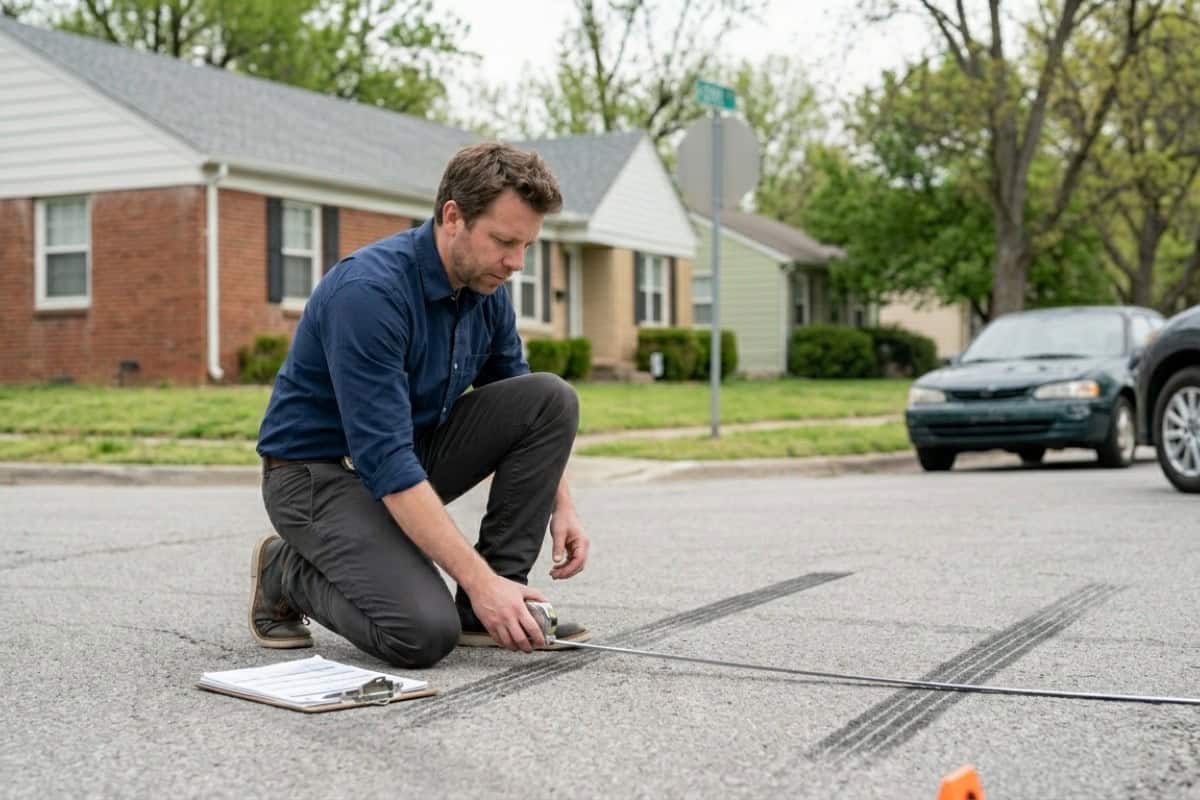
The National Highway Traffic Safety Administration maintains detailed research on crash causation factors that attorneys and experts use as reference in reconstructing the dynamics of a collision. The more evidence your attorney can gather and present to establish the other party’s greater share of fault, the better positioned your claim will be.
What You Should Avoid Saying After the Accident
One of the biggest mistakes people make in the moments after an accident is accepting blame — even casually. Saying “I’m sorry” at the scene, telling a police officer you didn’t see the other car, or making any statement that acknowledges fault can be used against you later. Oklahoma’s comparative fault system means every percentage point matters. Something said in the shock of the moment, without full knowledge of the facts, can become a damaging admission in your legal case.
This is true even in conversations with your own insurance company. Always consult an attorney before giving any recorded statement or signing any document related to the accident. The American Bar Association advises accident victims to exercise caution in all communications following an incident until they have had the opportunity to consult legal counsel.
Why Choose Truskett Law
Truskett Law has spent more than a decade fighting for injury victims throughout Tulsa and the surrounding Oklahoma communities, including cases involving complex shared-fault situations. We understand how Oklahoma’s comparative negligence law works, how insurance companies exploit it, and how to counter their strategies with solid evidence and skilled legal advocacy.
We do not take cases lightly or make promises we cannot keep. What we do promise is honesty, dedication, and relentless effort on your behalf. We work on a contingency fee basis, which means you pay nothing unless we recover compensation for you. The risk of pursuing your claim is ours — the reward belongs to you.
Conclusion
Partial fault does not mean no compensation in Oklahoma — it means your recovery is proportional to the other party’s greater share of responsibility, as long as you are 50% or less at fault. That nuanced distinction makes all the difference, and it is exactly the kind of legal complexity that Truskett Law in Tulsa navigates every day on behalf of injured Oklahomans. Do not assume you have no case just because the accident was not entirely the other person’s fault. Get the facts, get legal help, and protect your rights.
Even if you believe you were partially at fault, you owe it to yourself to find out exactly where you stand. Contact Truskett Law today for a free, confidential consultation. Don’t risk it — call Truskett.
Frequently Asked Questions
What happens if both drivers are equally at fault in Oklahoma?
If both drivers are found to be exactly 50% at fault, Oklahoma law still allows both parties to potentially recover under the modified comparative negligence rule. However, if either party is found to be 51% or more at fault, that party is barred from recovering any compensation. Exact 50/50 fault splits are relatively uncommon and often a subject of dispute.
How does Oklahoma’s comparative negligence law affect my settlement amount?
Your settlement or damages award is reduced by your percentage of fault. For example, if your total damages are $80,000 and you are found 25% at fault, you would recover $60,000. The reduction is applied directly to your total award, so even a small percentage of fault assigned to you can meaningfully reduce what you receive.
Can insurance companies assign me more fault than I deserve?
Insurance companies do sometimes assign inflated fault percentages to claimants as a way to reduce what they owe. Their fault determination is not final or binding — it is a starting point for negotiation. If you believe you have been assigned an unfair percentage of fault, an attorney can challenge that assessment with evidence and legal argument.
Does partial fault affect all types of personal injury cases in Oklahoma?
Oklahoma’s comparative negligence law applies broadly to personal injury cases, including car accidents, slip and falls, pedestrian accidents, motorcycle crashes, and more. The same 51% threshold and proportional reduction rules apply across these case types, though the specific facts of each case will determine how fault is ultimately apportioned.
Should I admit any fault after an accident in Oklahoma?
No. You should avoid making any statements that acknowledge fault at the scene or in communications with insurance companies before consulting an attorney. Even casual apologies or offhand comments can be interpreted as admissions and used to increase your assigned percentage of fault. Speak with an attorney before giving any recorded statement.
